

Playwrights and theatre makers can begin a conversation with the Literary & New Work department about future projects and ideas in development in three ways:
- Script submissions
- Idea submissions
- Inviting us to see your work
These three open submission processes are vital to the work of The Abbey Theatre. They allow us to discover new talent, find exciting projects for future programming and build relationships with artists and their ideas.
1. Script Submissions:
Playwrights are at the heart of the Abbey Theatre’s past and future. We have read and responded to open submissions from playwrights since the theatre was founded in 1904. The Abbey Theatre reads and responds with individual, detailed dramaturgical feedback to every play that is submitted to us.
Our script submission process helps us to get to know playwrights, identify and develop playwriting talent and find great plays written in English and Irish that we might produce on our stages.
How to send us your script:
- Read our submission criteria below.
- Fill in our script submissions form here.
- Follow the submission guidelines and press send.
If you have any access needs which mean that this submissions system is a barrier, please contact script@abbeytheatre.ie so that we can help find a workaround.
We are continually reviewing and updating our submission practices to make them work better for all theatre artists. If you have any feedback or questions on this subject, please email New Work Associate Rían Smith at rian.smith@abbeytheatre.ie.
The journey of your script:
Once submitted, each play is read and considered by our reader panel of experienced theatre professionals. Each play is read anonymously. We consider the potential of both the play, and the playwright.
Each play is then considered further by the Literary & New Work Team. We evaluate the work in how it might fit into the Abbey Theatre’s programme, as well as how the play might develop and how we might build a further working relationship with the playwright.
We will send you an email offering bespoke feedback on your script. As we read and respond to hundreds of plays each year, this process can take up to 6 months.
What are the potential outcomes of sending my script to the Abbey Theatre?
- Every script will be read and considered by the reader panel and the Literary & New Work team.
- Every script receives detailed dramaturgical feedback by email.
- Playwrights can be invited to meet with a member of the Literary & New Work team to discuss their ideas and ambitions.
- Some plays will be engaged for further development like a reading or a workshop process.
- Some playwrights will be offered craft and idea development opportunities like skill-building workshops, writers groups or space and time to work in our Abbey Theatre Artists’ Studio.
- While most of the work we produce is from commission, we have produced scripts sent to us via our open submissions. It’s rare, but it does happen. Moreover, the relationships we develop through reading or seeing work often lead to us commissioning a new piece of work in time, even if we don’t produce the first piece of work you send.
Script Submission Criteria:
- We accept plays from Irish playwrights or playwrights who are resident on the island of Ireland. We don’t consider work that does not match that description.
- We accept plays written in Irish or English. We don’t read plays in other languages. Our primary interest is in full-length plays. However, we do also accept short plays.
- We do not accept novels, screenplays, radio plays, or poetry. Scripts in these forms will not be read. We are looking for plays made for a live theatre medium.
- We only accept completed plays. Extracts will not be read.
- Unless specifically requested, we do not accept resubmissions. Instead, we encourage you to put your best foot forward when submitting a script. This means we advise against sending in your very first draft. Playwriting is a craft – take time to consider, edit, and revise your script as much as you can so that it is the best version of itself when you press send.
- Scripts must be sent as Word or PDF documents, clearly typed and formatted; we cannot accept handwritten work or printed hard copies.
- Please ensure that your name and contact details are not on the script document. Scripts are read anonymously.
- We only accept one script per playwright at a time.
- We do not accept paper submissions. All correspondence will be by email.
2. Idea Submissions:
Our idea submission process helps us to build relationships with theatre makers and find great ideas for the Abbey Theatre to support.
If you are a professional theatre maker or have an established performance practice and you have an idea you want to let us know about, you can share it via our idea submissions process. It might be a piece of dance theatre, an interdisciplinary performance, an event proposal – any theatre project that is not primarily based on a written script.
We accept ideas submissions all year round. Please prepare a written idea proposal of no more than two pages/ 1000 words that includes the information below:
- Your professional biog
- What is your idea?
- Where are you in the process of making it?
- Who are your collaborators?
- What and when are the ideal next steps?
- Your submission may include links to video, audio, images, movement scores, extracts of text or other supporting materials. We particularly encourage this from theatre-makers submitting their work to the Abbey Theatre for the first time. This isn’t a place for scripts – send those to us via script submissions.
Submit this proposal to ideas@abbeytheatre.ie. If you have any queries or need support with this process, you can send your questions to Selina O’Reilly, New Work Assistant at new.work@abbeytheatre.ie.
The process of submitting an idea is brief by design; we respect your time and effort in compiling a submission. We will fully consider the material you send us and come to a decision about whether the Abbey Theatre has the capacity and interest to advance the conversation. If we do want to advance the conversation, we will invite you to a meeting, or ask you for more detailed information.
Who will read my ideas?
The Literary & New Work Team read and consider all idea submissions. Find out more about us and our work below. You can expect to hear back from us within 12 weeks of your submission. Every submission is read and responded to with care.
Please note: This submission process is for new ideas and projects that are in the early stages of development only. We do not accept submissions for the future presentation of existing shows or touring work. Abbey Theatre presentations are selected by the Artistic Director’s invitation. To enquire about co-producing and presenting opportunities contact producingteam@abbetheatre.ie
3. Invite us to see your work:
The best way to introduce yourself to the Literary & New Work Team is to invite us to see your work. Our team, together with our colleagues in Casting and Producing, see hundreds of shows across Ireland each year, within time and budget limitations. You can send us an invitation to see your show by emailing new.work@abbeytheatre.ie
Please submit information about your show 4-6 weeks before the event takes place to give us the best chance at seeing it. As part of your email invite, it is helpful to let us know:
- Your practice as a theatre maker and why you want us to see this production.
- What kind of opportunities you are looking to engage with at the Abbey Theatre.
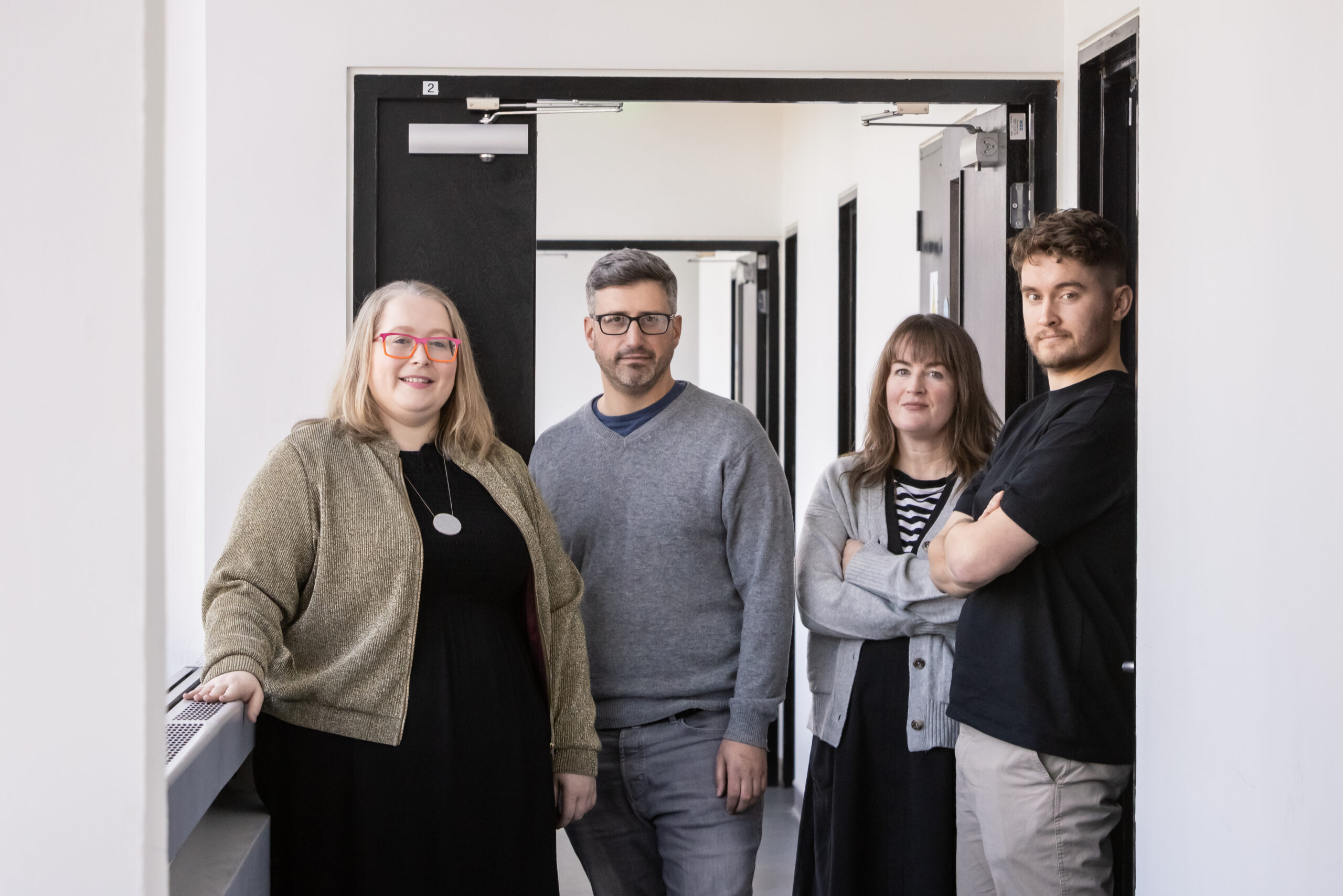
Who We Are
Literary & New Work Director Ruth McGowan
New Work Associate Jesse Weaver
New Work Associate Rían Smith
New Work Assistant Selina O’Reilly
Script Associate Tanya Dean
What We Do
The Literary & New Work Department work with playwrights and theatre makers to generate future work for our two stages, the Abbey and the Peacock. We commission new plays, take fresh looks at the rich Irish theatrical canon and provide resources and dramaturgical supports to a dynamic range of ideas in development. The projects our team are working on today will fuel Abbey Theatre programming in the years to come.
The Literary & New Work team manage the commissioning and artistic development of plays and projects from idea stage to final draft. We embrace a wide range of ideas and talent, designing and delivering bespoke supports for each project on our development slate. We work closely with artists, providing dramaturgical feedback, creative engagement and practical supports, like the space and time to develop a burgeoning idea, in the rehearsal room or in our Abbey Theatre Artists’ Studio. We look to the now, investing in the future of the Irish theatre canon.
Celebrating the Abbey Theatre’s legacy, we champion the role of the playwright. We support a network of playwrights from early career to established artists, in collaboration with our Senior Associate Playwrights Marina Carr and Conor McPherson. We read and offer feedback to hundreds of script submissions per year via our open submission process.
We are interested in supporting ambitious theatre-making in all its forms. The idea submission process is our channel for non-text based work, devised work, multidisciplinary work, site responsive work – any projects that aren’t playwright lead. All idea submissions are read and considered by the Literary & New Work team, and responded to individually.
The script and idea submission process enables us to find work we might produce and to get to know playwrights and theatre makers we can work with in the future.
Alongside the development of a body of work for our own stages, we support the wider theatre ecology by creating opportunity for conversation, community and craft development, including writers groups, skill-sharing masterclasses, workshops and events.
We track talent, facilitate artist advancement opportunities and build relationships with a broad range of playwrights and theatre makers. Together with the Artistic Director, and our colleagues in Producing and Casting, we do this work to drive and support the effective delivery of the Abbey Theatre’s artistic vision across all of its programmes.
Have a question?
Review our FAQs here